Icon
Related news and articles
Using
The plugin includes three commands:
Room Finishing
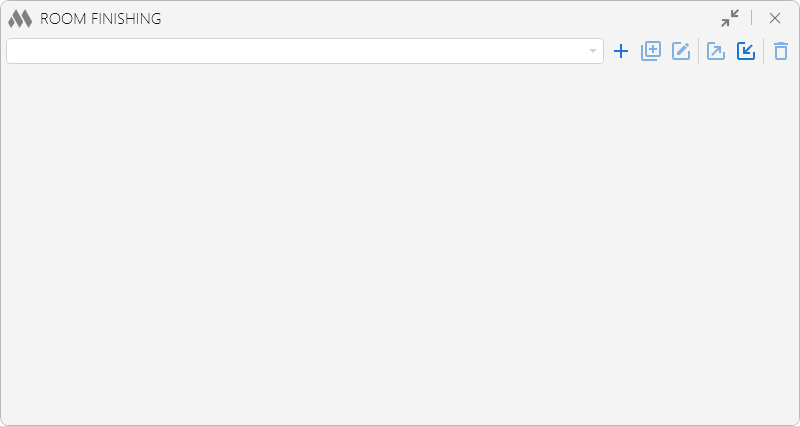
To get started with the plugin, create a room finishing configuration by clicking  . Created configurations can be duplicated
  , renamed
  , exported
  , imported
  , and deleted
  using the corresponding buttons.
This tab is used to configure rules for automatically creating finishing elements for rooms in the project.
To add a room finishing settings block, click Add finishing creation settings. Each block consists of an element filter based on room parameters and separate settings for creating:
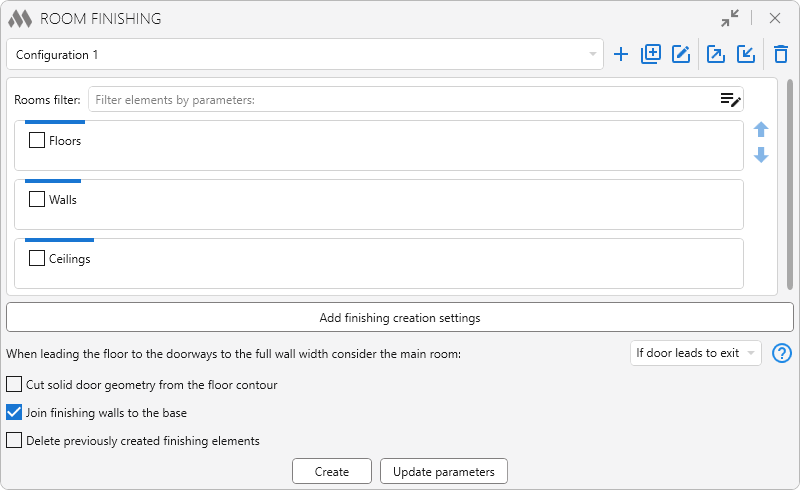
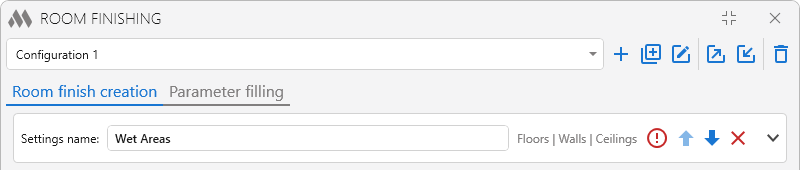
Each settings block can be assigned a name. The block can be collapsed or expanded using the button on the right side of its header. When multiple finishing options are specified, the corresponding settings blocks can be reordered using the buttons 
 .
.
The Delete previously created finishing elements option applies to all finishing elements of the current configuration and allows previously created elements to be automatically deleted before new ones are created.
The Bottom offset basis option: From level/From room bottom allows you to select the reference from which the bottom offset of all finishing elements will be calculated.
When creating finishing elements, if previously created floors and ceilings match the new ones, their boundaries are updated without creating new elements.
When you click Create, the following finishing creation options are available:
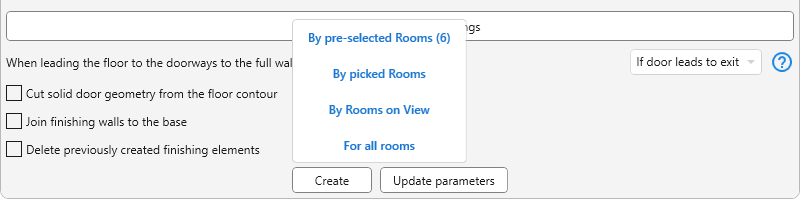
- The By pre-selected Rooms option applies the specified finishing settings to rooms selected in the model before launching the plugin.
- The By picked Rooms option allows you to select rooms directly in the model. After completing the selection, click "Done" to start creating finishing elements.
- The By Rooms on View option applies the selected settings to all rooms displayed in the active view. Finishing elements are created along the boundaries of all rooms shown on the plan.
- The By all rooms option applies the selected settings to all rooms in the project. Finishing elements are created along the boundaries of all rooms in the project.
A progress window is displayed while finishing elements are being created. The operation can be interrupted by pressing Esc.
The Update parameters button allows you to copy parameter values from rooms or write values to specified parameters of previously created finishing elements.
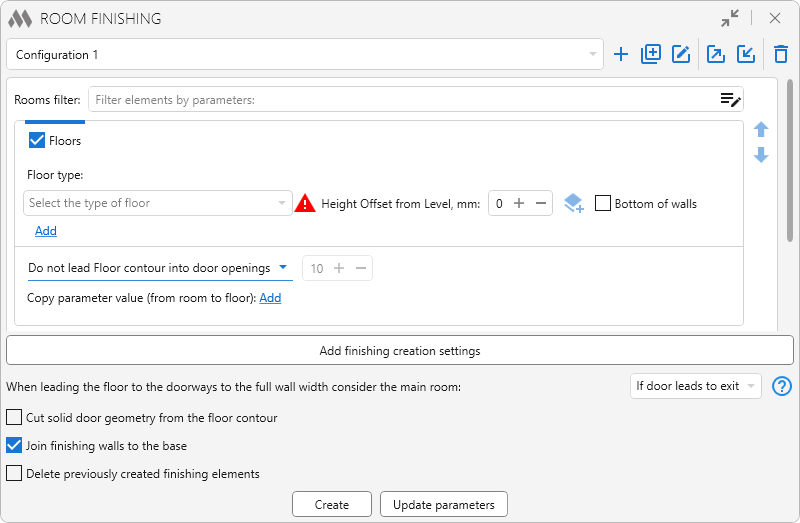
To create floors for rooms, enable the corresponding checkbox in the finishing settings block and specify the required parameters.
The warning indicator .png) indicates that the floor type has not been specified or is missing from the current project. In this case, floors will not be created.
indicates that the floor type has not been specified or is missing from the current project. In this case, floors will not be created.
Next, select a floor type from the drop-down list containing all floor types in the current project.
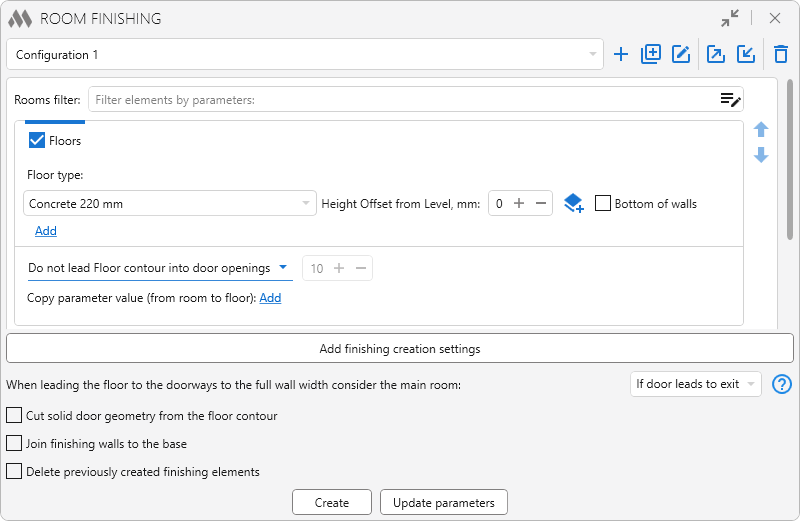
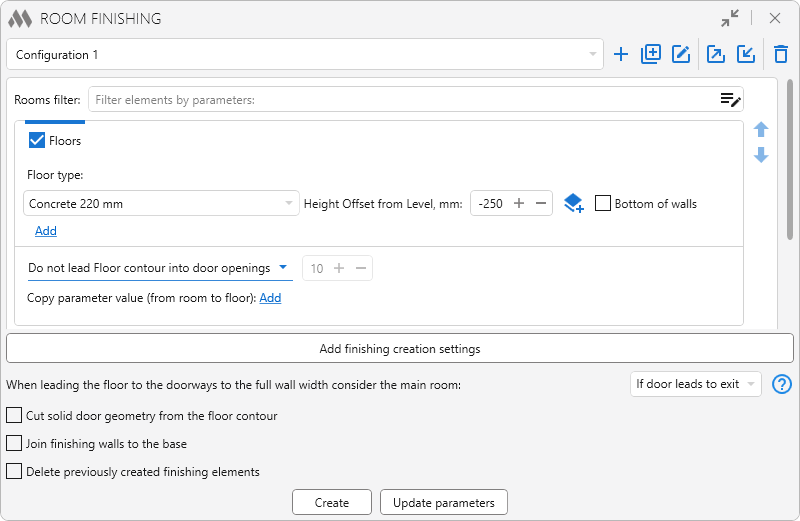
Height Offset from Level, mm/Offset from Room bottom allows you to offset the floor relative to the level or the bottom of the room, depending on the selected settings. The value can be positive or negative.
The  button allows you to enter the thickness of the selected floor type in the field with a "+" sign.
The Bottom of walls option allows the selected floor to extend beneath finish walls when floors and finish walls are created simultaneously. When using a multilayer floor, the checkbox can be enabled for only one layer. All layers below the selected layer will also extend beneath the finish walls. When this option is enabled, the Bottom, mm parameter of the finish walls is automatically set to the value of Height Offset from Level, mm/Offset from Room bottom. This value cannot be edited.
Using the Add button, you can create a multilayer floor assembly by adding several floor types:
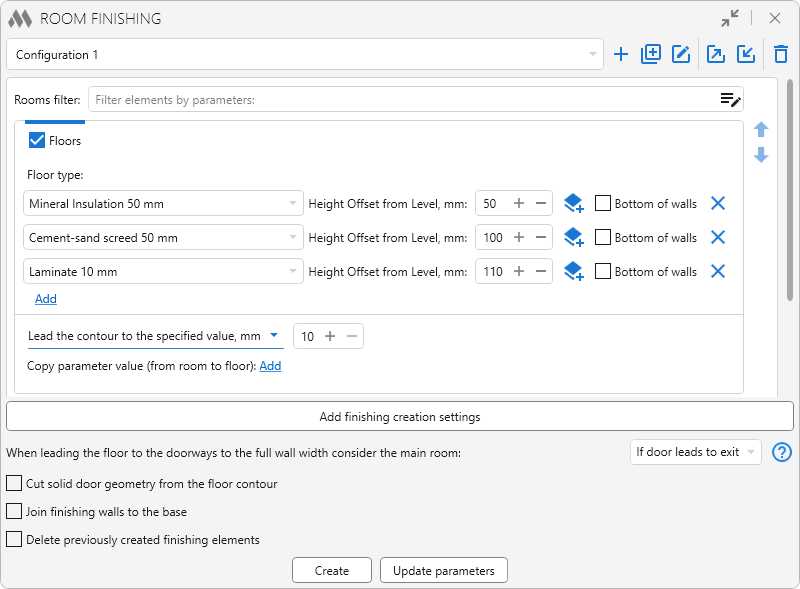
This configuration creates a floor consisting of several layers. Each layer is a separate element. If the offset is specified correctly, the floor will be created above the structural floor slab.
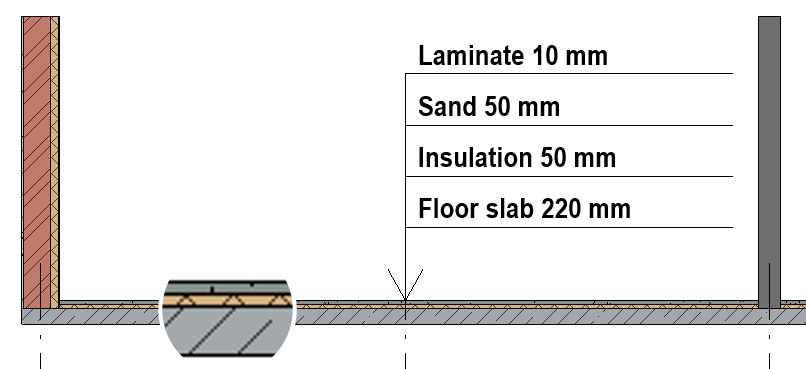
When creating a multilayer floor, the offset from the level for each layer must equal the sum of the thicknesses of all preceding layers plus the thickness of the current layer, because the layer thickness extends downward.
The order of floor types can be changed by dragging them. The position of each layer is determined by its specified offset.
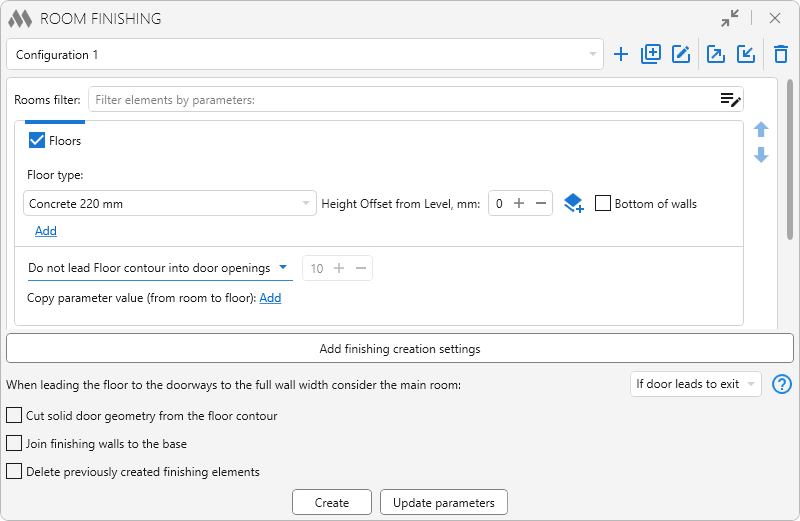
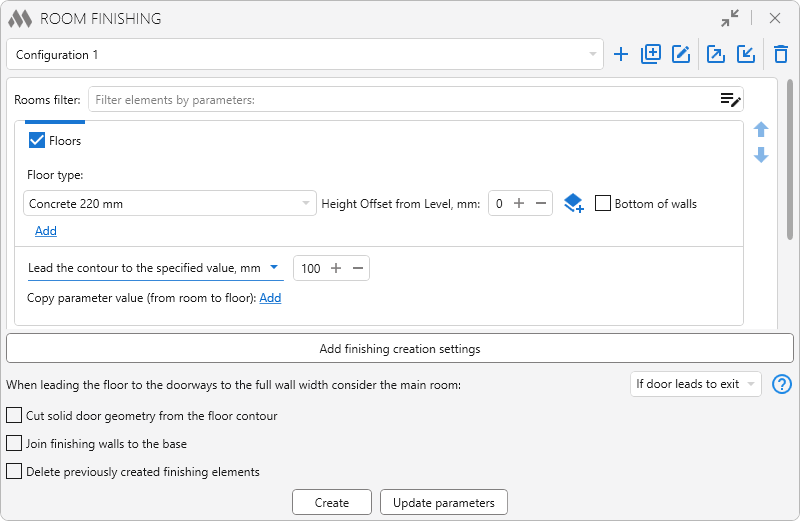
The next setting determines how the floor boundary extends into door openings. The following options are available in the drop-down list:
- Do not extend the floor boundary into door openings
- Extend the boundary to the middle of the opening
- Extend the boundary through the full thickness of the opening
- Extend the boundary to the specified value, mm
- Extend the boundary to the middle of the door leaf
Below is the Copy parameter value (from room to floor) option. Clicking Add again adds new fields and allows you to copy values of multiple parameters simultaneously. Configured parameter value copying rules can be copied and pasted using the Copy and Paste commands.
The Set parameter value option allows you to specify a fixed value for a selected parameter of the floors being created. Using the Add button, you can add multiple parameters and specify a value for each of them.
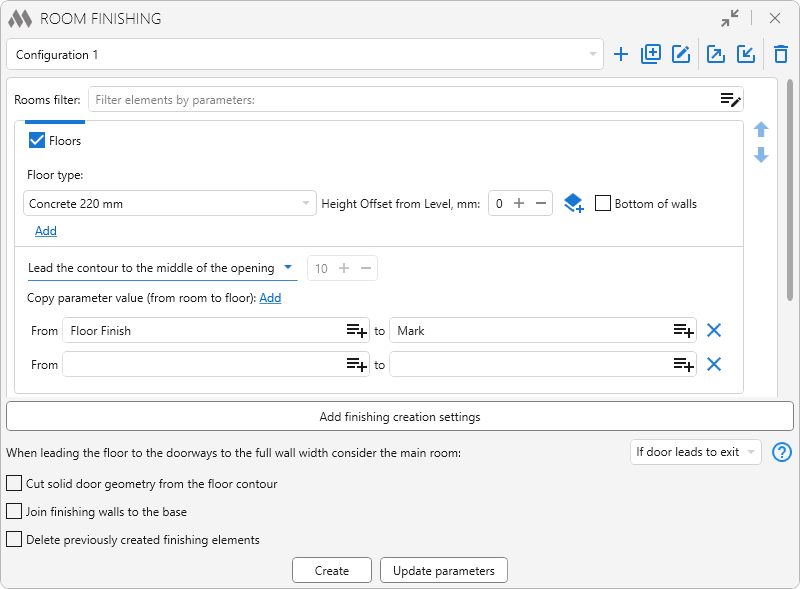
At the bottom of the plugin window are options that apply to all floors created within the current configuration.
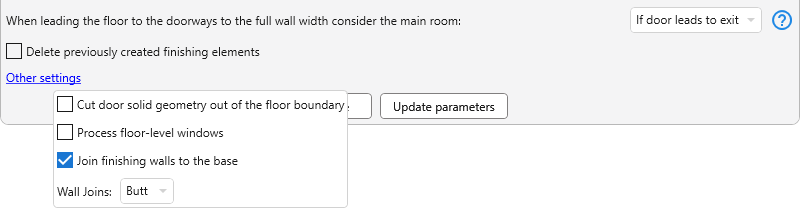
When leading the floor to the doorways to the full wall width consider the main room: If door leads to exit/If door leads to entrance – allows you to specify which of the two adjacent rooms is considered the main room: the room from which the door leads out or the room into which it leads. The floor in the door opening will be created only for this room. This option applies even if only one of the adjacent rooms is selected.
Process floor-level windows – when enabled, the floor extends into openings created by elements of the "Windows" category through the full thickness of the opening. When disabled, such openings are processed according to the general rules.
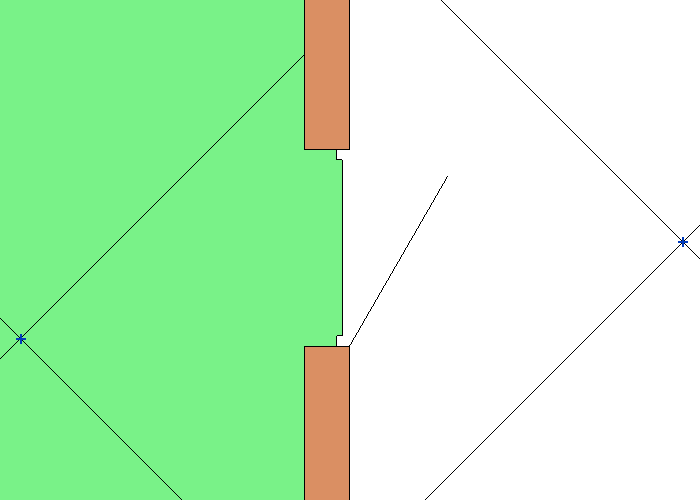
Cut door solid geometry out of the floor boundary – when enabled, the solid geometry of doors is cut out of the floor boundary during creation:
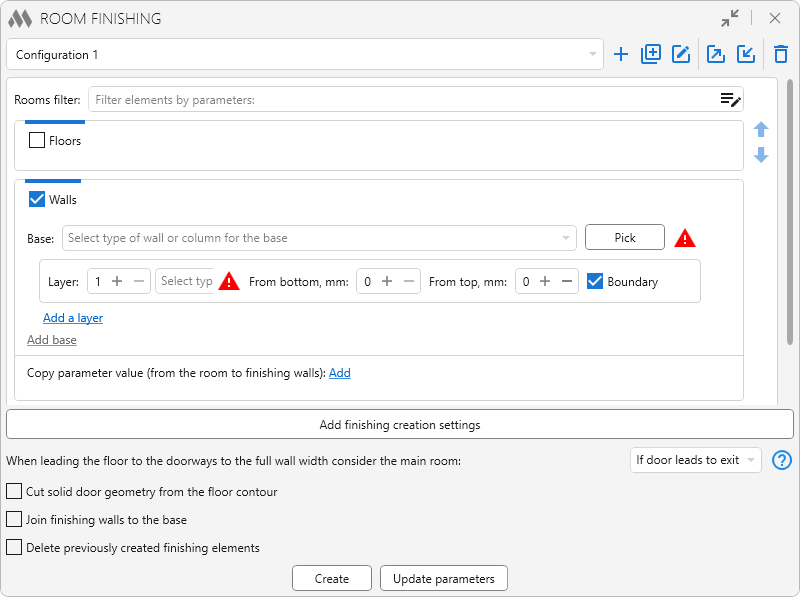
To create finish walls, enable the corresponding checkbox in the finishing settings block and specify the required parameters.
The warning indicator indicates that the base type or finish wall type has not been specified or is missing from the current project. In this case, finish walls will not be created.
The plugin provides three Base selection mode options for creating finish walls:
- For all wall and column types – finish walls are created for all walls and columns of the room without additional filtering.
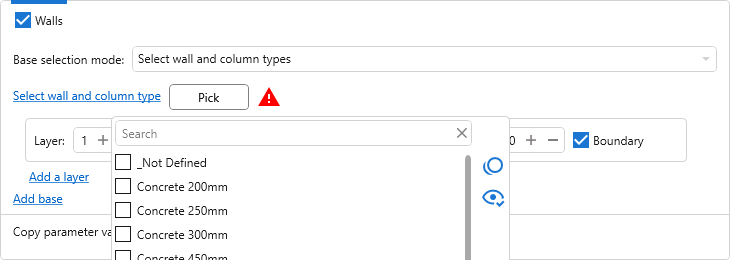
- Select wall and column types – allows you to specify one or more wall and/or column types in the current project to be used as the base for creating finish walls. Types can be selected from the drop-down list or directly in the model using the Pick button.
3. Wall and column filter – in this mode, the wall and column types used as the base are determined using an element filter based on wall and column type parameters.
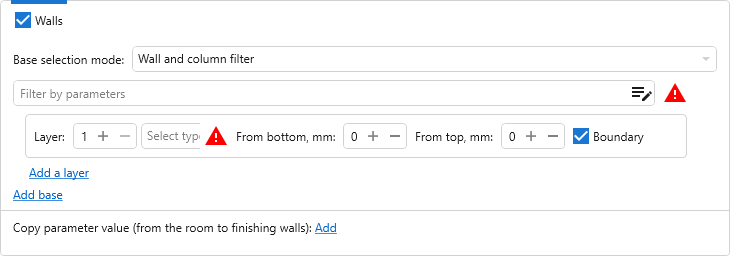
The plugin supports creating finish walls using base walls and columns from linked files. If elements from a linked file are used as the base, cutting openings in finish walls is supported starting with Revit 2022.
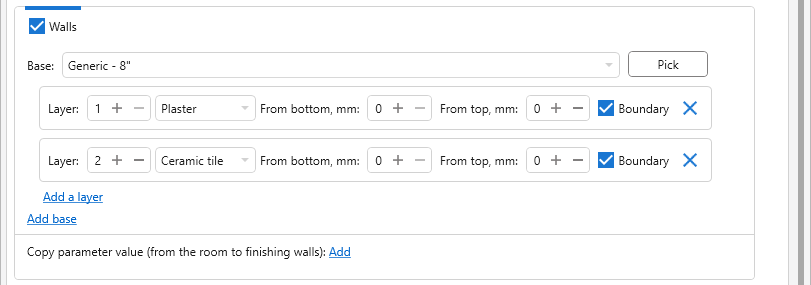
For each selected base, the parameters of the finish walls to be created are configured. Finish walls can consist of multiple layers and multiple sections along their height.
Height Offset from Level, mm – specifies the offset of the bottom edge of finish walls relative to the room level. If From room bottom is selected in the Bottom offset basis setting, the offset is measured from the bottom boundary of the room. The value can be positive or negative.
The drop-down list on the right allows you to select how the upper boundary of finish walls is determined:
- Offset from the top of the room, mm – determines the upper boundary relative to the top of the room with the specified offset
- Finishing Height, mm – determines the upper boundary based on the specified finishing height.
The Room boundary option allows you to create finish walls with the Room Bounding property enabled.
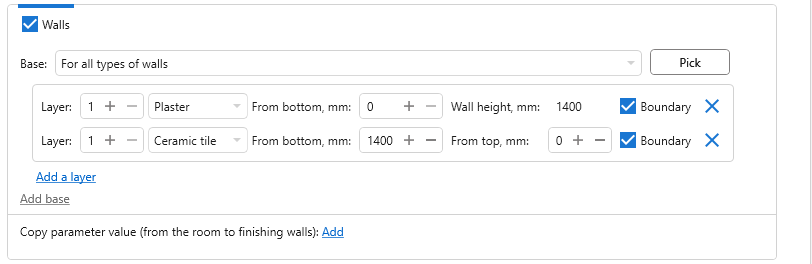
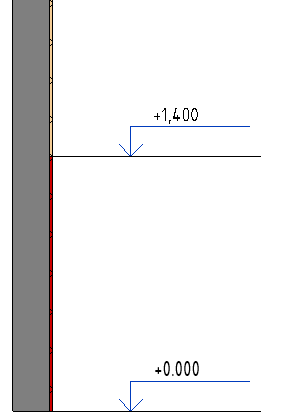
Using the Add part button, you can add another wall section to the current layer. For each section, a finish wall type is selected and the Wall height is specified. The height can be set to Up to room top or to a specific value in millimeters.
Using the Add a layer button, you can add another finish wall layer.
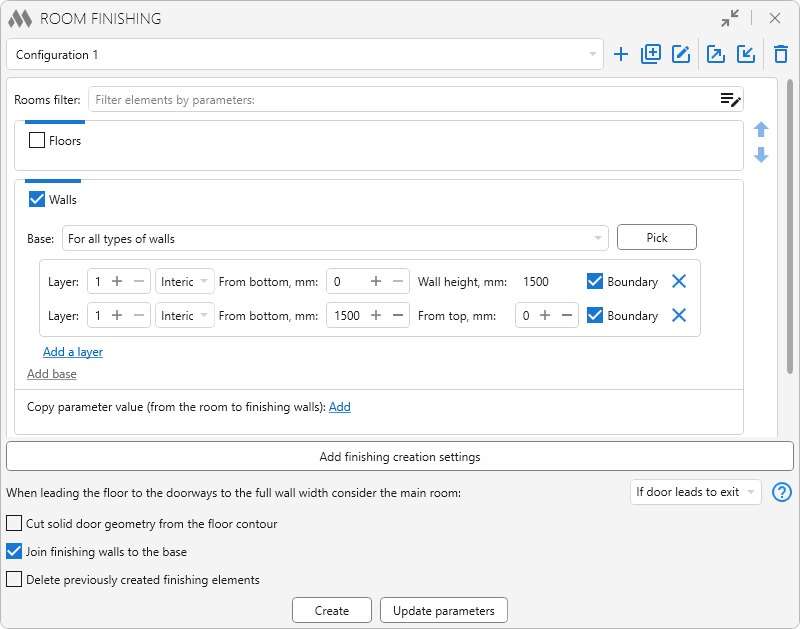
The Add base button allows you to configure finish wall creation for another base type within the same room finishing settings block.
Below is the Copy parameter value (from the room to finishing walls) option. Clicking Add again adds new fields and allows you to copy values of multiple parameters simultaneously. Configured parameter value copying rules can be copied and pasted using the Copy and Paste commands.
The Set parameter value option allows you to specify a fixed value for a selected wall parameter. Using the Add button, you can add multiple parameters and specify a value for each of them.
At the bottom of the plugin window are options that apply to all finish walls created within the current configuration:
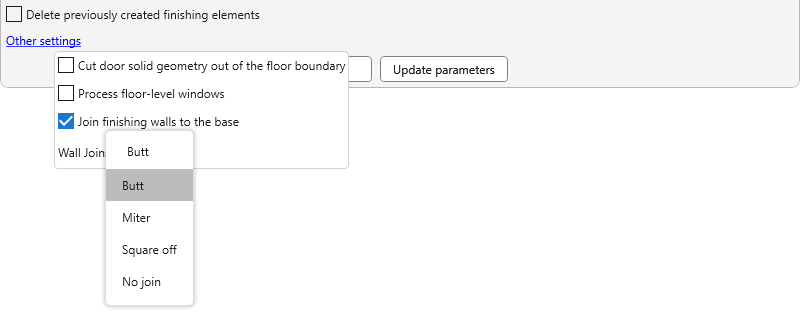
- Join finishing walls to the base
- Merge adjacent finishing walls of the same type – merges adjacent sections of finish walls of the same type into a single wall when their base types differ. When disabled, these sections are created as separate walls.
- Wall joins – allows you to select the join type for the finish walls being created: Butt, Miter, Square Off, or No Join.
Baseboards are created as elements of the "Walls" category.
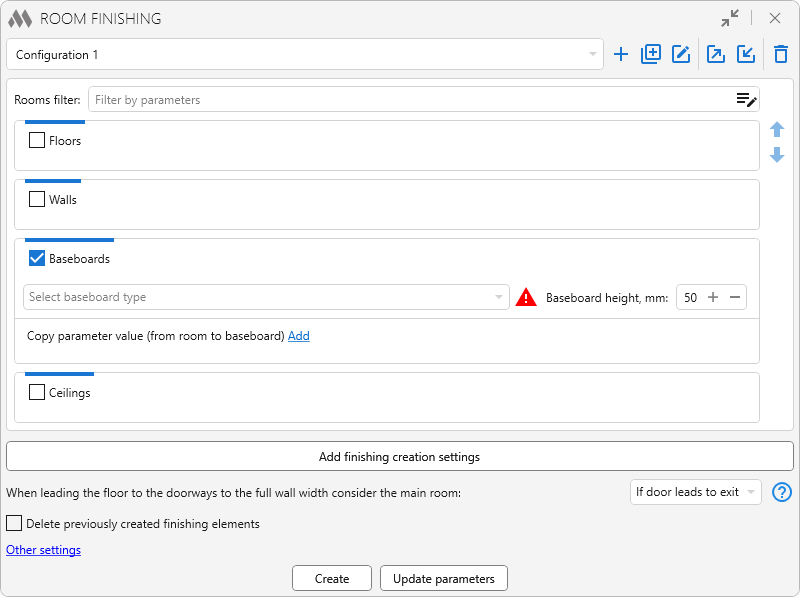
To create baseboards for rooms, enable the corresponding checkbox in the finishing settings block and specify the required parameters.
The warning indicator indicates that the baseboard type has not been specified or is missing from the current project. In this case, baseboards will not be created.
Next, select a baseboard type from the drop-down list containing all wall types in the current project.
The Baseboard height, mm option specifies the height of the baseboard being created relative to the floor level or, if there is no underlying floor slab, relative to the story level or the bottom of the room, depending on the selected settings.
The drop-down list to the right of the height value specifies where the baseboard will be placed. The baseboard can be placed Place on the floor, relative to the room level, or relative to the bottom of the room with a specified offset.
Below is the Copy parameter value (from room to baseboard) option. Clicking Add again adds new fields and allows you to copy values of multiple parameters simultaneously. Configured parameter value copying rules can be copied and pasted using the Copy and Paste commands.
The Set parameter value option allows you to specify a fixed value for a selected parameter of the baseboards being created. Using the Add button, you can add multiple parameters and specify a value for each of them.
Creating ceilings is supported in Revit 2022 and later.
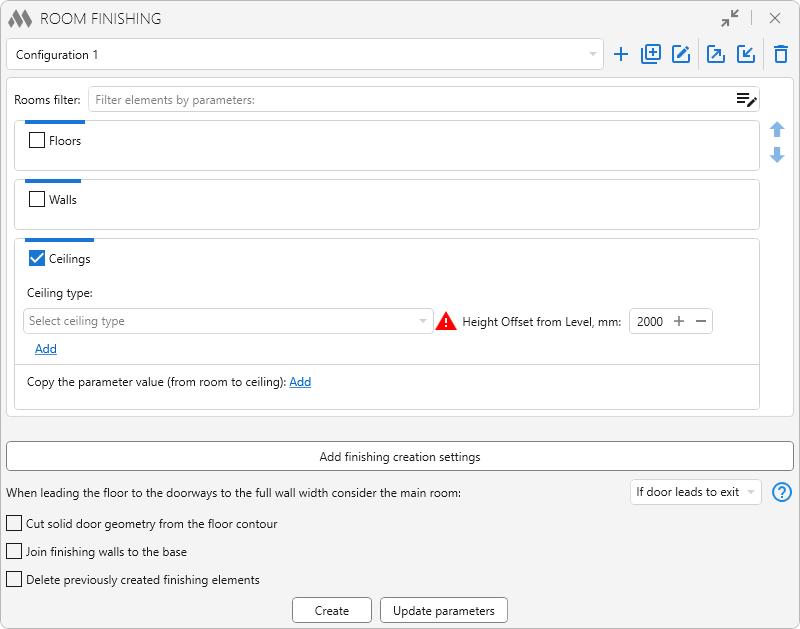
To create ceilings for rooms, enable the corresponding checkbox in the finishing settings block and specify the required parameters.
The warning indicator indicates that the ceiling type has not been specified or is missing from the current project. In this case, ceilings will not be created.
Next, select a ceiling type from the drop-down list containing all ceiling types in the current project.
Offset from the Room level, mm/Offset from Room bottom allows you to specify the ceiling position relative to the level or the bottom of the room, depending on the selected settings. The value can be positive or negative.
Offset from boundaries, mm – offsets the boundary of the ceiling being created inward from the room boundaries (walls, columns) by the specified value.
Using the Add button, you can create a multilayer ceiling by adding several ceiling types. The order of ceiling types can be changed by dragging them.
Below is the Copy the parameter value (from room to ceiling) option. Clicking Add again adds new fields and allows you to copy values of multiple parameters simultaneously. Configured parameter value copying rules can be copied and pasted using the Copy and Paste commands.
The Set parameter value option allows you to specify a fixed value for a selected parameter of the ceilings being created. Using the Add button, you can add multiple parameters and specify a value for each of them.
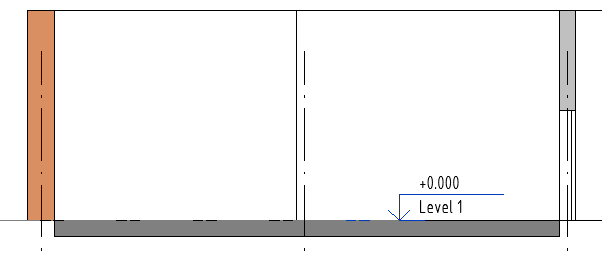
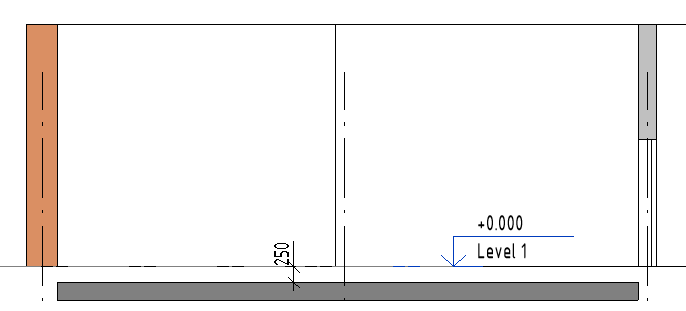
1. Floor offset from level options
Floor offset from level is set to 0 mm:
Floor offset from level is set to -250 mm:
2. Creating floors with different settings using two adjacent rooms as an example:
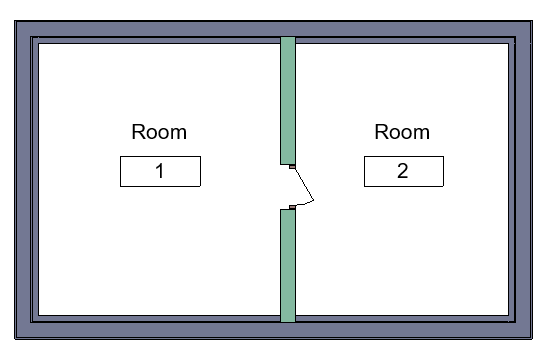
If you select Do not extend the floor boundary into door openings, the floor is created strictly along the room boundary, leaving door openings unfilled:
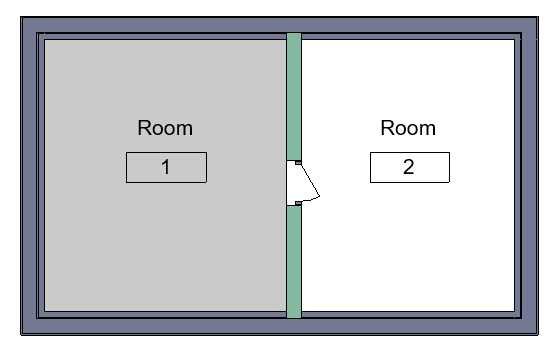
If you select Extend the boundary to the middle of the opening, the floor will extend halfway through the wall in door openings:
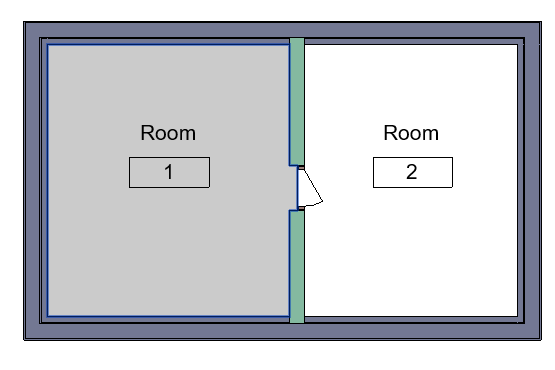
If you select Extend the boundary through the full thickness of the opening and enable Cut door solid geometry out of the floor boundary, the floor will extend into door openings through the full wall thickness, and the solid geometry of doors will be cut out of the floor boundary:
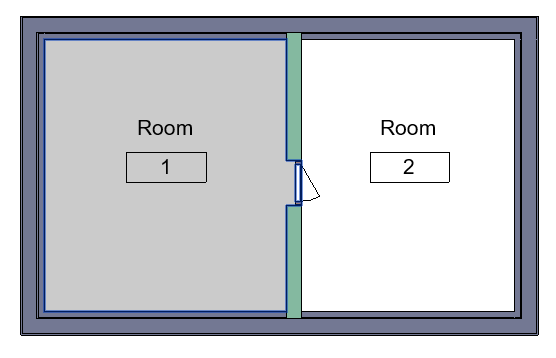
If two adjacent rooms share a door opening and If door leads to entrance is selected in the When leading the floor to the doorways to the full wall width consider the main room option, the floor in the door opening will belong to the room into which the door opens:
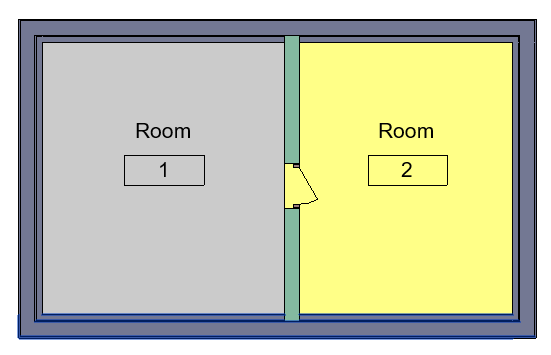
If you select Extend the boundary to the specified value, mm, you can specify how far the floor will extend into the door opening:
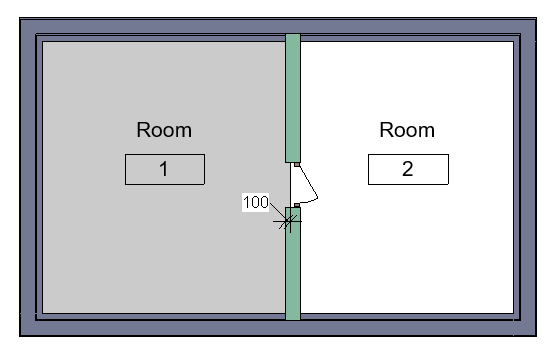
3. Creating finish walls and floors with the Bottom of walls floor option enabled
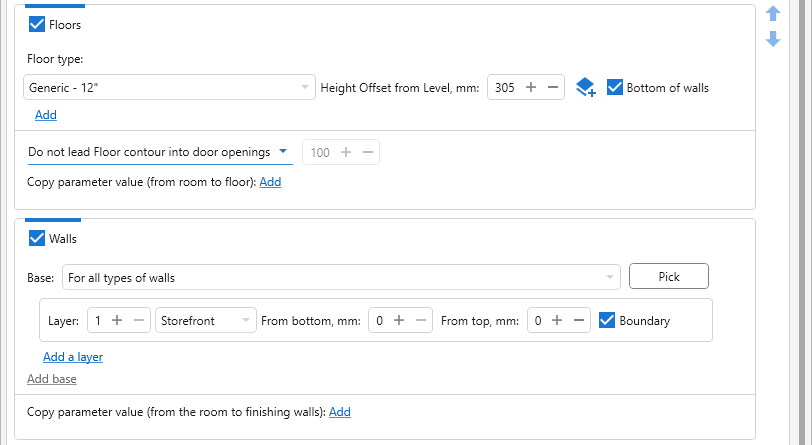
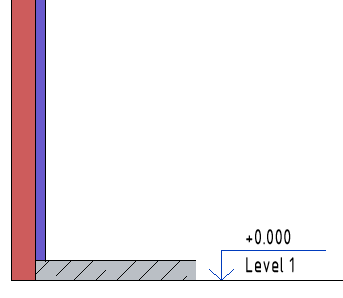
4. Creating multilayer finish walls:
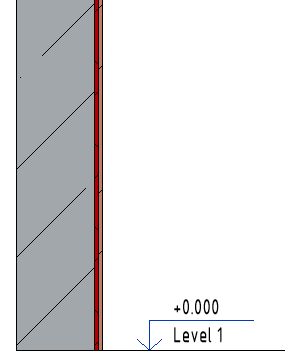
5. Creating finish walls consisting of multiple sections along their height:
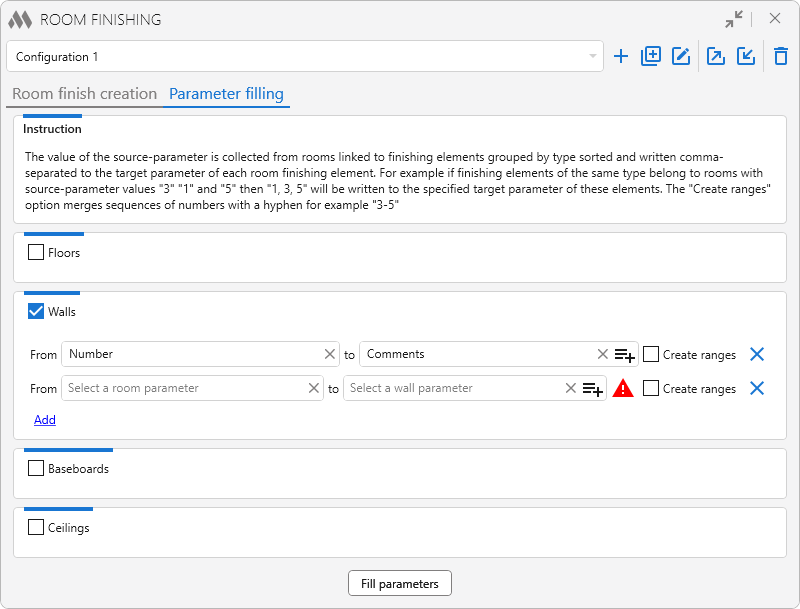
This tab is used to transfer parameter values in batches from multiple rooms to their associated finishing elements. Unlike parameter filling on the Room finish creation tab, where a room parameter value is copied directly to a finishing element belonging to the same room, this tab collects values from all rooms associated with elements of the same type. The collected values are sorted and written to the specified parameter, separated by commas.
This is useful, for example, for creating a consolidated list of room numbers in a schedule: one finishing element type may be used in multiple rooms, and all their values will be automatically collected into an element parameter.
Parameter filling rules are defined separately for each type of finishing element: Floors, Walls, Baseboards, and Ceilings. To enable parameter filling for a particular type, select the checkbox next to its name.
For each enabled type, one or more parameter filling rules can be specified. Each rule contains:
- From – the room parameter whose value will be read
- to – the instance parameter of the finishing element to which the resulting value will be written
- Create ranges – an option that allows consecutive numeric values to be combined into ranges.
Multiple parameter filling rules can be added by clicking Add.
After configuring the rules, use the Fill parameters button to collect and write parameter values for finishing elements using one of the following options: By pre-selected Rooms, By picked Rooms, By Rooms on View, or By all rooms.
Update Room Finishing
The command is available in Revit 2022 and later.
The command allows you to update the most recently created finishing elements in selected rooms without opening the main plugin window.
The command allows you to:
- update the boundaries of previously created floors and ceilings
- recreate previously created walls and baseboards, including those that have been deleted.
A progress window is displayed while finishing elements are being updated. The operation can be interrupted by pressing Esc.
Manage Room Finishing
The command is intended for managing associations between finishing elements and rooms.
An association between finishing elements and a room is established automatically when finishing elements are created using the Room Finishing command. This association allows the plugin to determine which room a finishing element belongs to and use this information in subsequent operations, such as filling parameters or selecting finishing elements.
The Manage Room Finishing command is used to manage these associations manually in nonstandard situations, for example when finishing elements are created manually or when an element needs to be reassigned to another room.
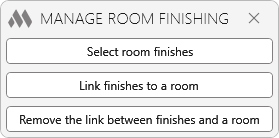
The following actions are available in the command window:
- Select room finishing – allows you to select finishing elements associated with the selected room in the model.
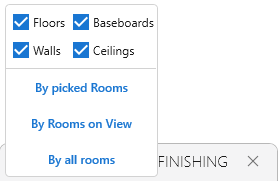
After starting the command, you can specify which types of finishing elements should be included: floors, walls, baseboards, and ceilings. You must also select the search scope: By pre-selected Rooms, By picked Rooms, By Rooms on View, or By all rooms.
- Link finishing to room – creates an association between selected finishing elements and a room. After starting the command, first select a room, then select the finishing elements to be associated with it. When linking walls with a height of 80 to 200 mm, the plugin prompts you to specify whether the selected walls should be considered baseboards.
After the association is created, the finishing elements will be considered as belonging to the selected room. This is necessary for plugin functions to operate correctly, for example when filling finishing element parameters using room data.
- Remove link between finishing and room – removes an existing association between finishing elements and a room. After starting the command, first select a room, then select the finishing elements whose association with that room should be removed.
After the association is removed, the finishing elements will no longer be considered as belonging to that room and will not participate in plugin operations associated with it.


